When the Narrative Abandons the Frontline - Qantas
Reading time: 6 minutes
For decades, the Flying Kangaroo enjoyed one of the most profitable moats in commercial aviation. Australians did not merely purchase flights; they paid a consistent 20% to 30% premium for an intangible cultural asset: "The Spirit of Australia." It was an unspoken, national idea. Passengers accepted higher fares on the assumption that Qantas offered reliability and safety, combined with easygoing, competent domestic hospitality.
Between 2020 and 2023, that brand experience….disappeared.
Unanimous High Court rulings declaring workforce dismissals unlawful, record-breaking Australian Competition and Consumer Commission (ACCC) regulatory actions, and historic lows in customer satisfaction—the impact has been significant.
Qantas made the corporate error of treating its brand promise as an external marketing broadcast rather than an operational constraint. When executive leadership optimized balance-sheet margins by gutting the very people responsible for customer delivery, the brand promise became a liability.
1. The Gap Between Marketing and Reality
While corporate affairs and marketing teams were pushing out sentimental, multi-million-dollar broadcast campaigns celebrating tearful families reuniting at airport arrival gates after COVID, the organisation was executing an unprecedented gutting of frontline capability:
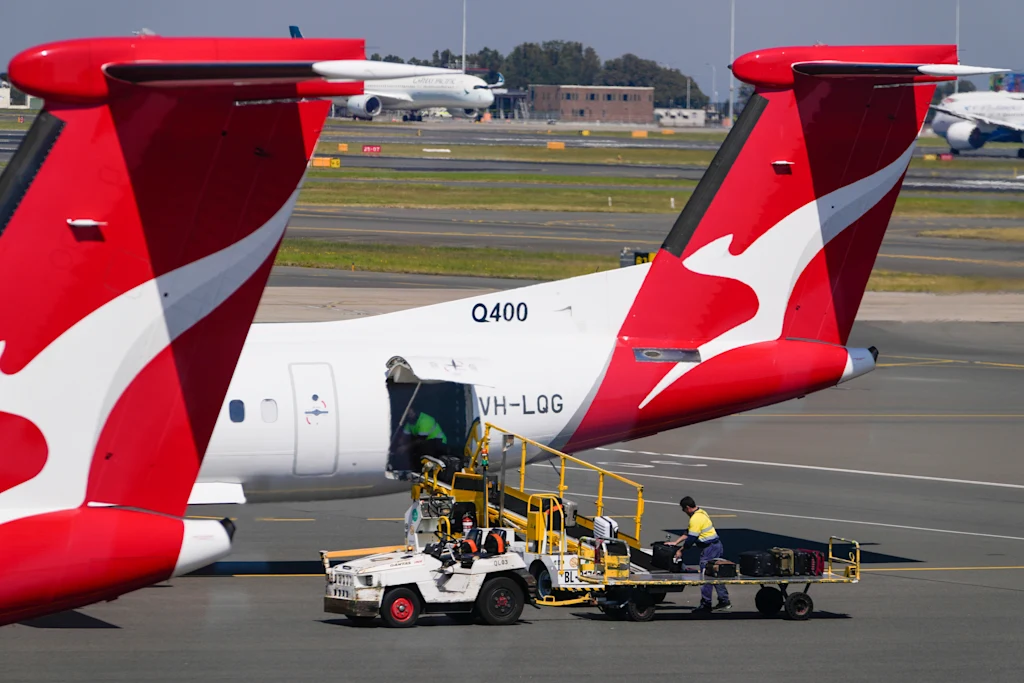
Outsourcing Shock: In late 2020, Qantas unlawfully outsourced roughly 1,700 in-house ground handlers, baggage handlers, and ramp staff across 10 Australian airports to third-party contract suppliers.
Logistical Contagion: Ground handling requires specialized knowledge, airport security clearance, and coordinated turnaround timing. Replacing seasoned in-house teams with fragmented, low-bid contract labor triggered a domino effect. Bags went missing at record highs, flight delays compounded through the network, and customer service call lines reportedly exceeded four-hour wait times.
The Human Shield: Because high-budget television spots continued to run, customer expectations remained fixed to a standardcthey couldn't deliver while flights were canceled and luggage vanished. The entire weight of consumer outrage fell directly on airport gate staff, customer care reps, and cabin crew, who were forced to operate without operational authority or resources.
When a discount carrier loses your bag, it is frustrating but you accept it. When an airline charging legacy carrier rates under a patriotic brand leaves you stranded without luggage, it hits harder.
2. Brand as Paint, Not Architecture
Why do sophisticated executive teams make decisions that destroy their core equity?
Because within traditional corporate structures, brand is cordoned off in the marketing department, completely insulated from procurement, industrial relations, and resourcing or operational decisions.
Qantas operated under three flawed assumptions:
The Frontline Was an Expense Line, Not the Product Anchor
In services and hospitality, the frontline employee is the commercial product. The safety checks, the cabin demeanor, the luggage speed, and the gate interactions are the sole physical proof points of the brand promise. By viewing 1,700 ground staff merely as a variable expense to be outsourced, Qantas didn't consider the impact on the brand.
Marketing Was Expected to Camouflage Operational Failure
Rather than dampening marketing messages while operations were struggling, Qantas leaned heavily into sentimental broadcast campaigns. Continuing to proclaim "The Spirit of Australia" while ground logistics were in chaos changed how they were viewed. It actively degraded consumer patience, painting the brand as out of touch and cynical.
Absence of Brand at the Decision Moment
The boardroom table had the authority to pull the emergency brake on procurement decisions, but assumedly with an absence of someone who considered the brand risk. No one asked the existential commercial question: “If we replace dedicated career ground crews with casualized contract workers, do we lose the operational capability required to charge a 30% premium?”
3. How It Could Have Played Out
An enterprise corporate narrative is not an advertising slogan; it is an operating system. Had brand strategy served as a decision-making framework rather than a promotional tool, the response would have unfolded differently across three operational levers:
A Brand Lens
Running costs and industrial relations choices should have been run through a Brand Filter. If an operational initiative breaks customer reliability, it isn’t an efficiency win—it is the liquidation of brand equity for short-term earnings. Ground operations should have been categorized as core brand infrastructure. Perhaps they couldn't afford to not outsource - but the brand took the hit in the long term.
Shifting the Tone
When network turnaround broke down in 2022, corporate communications and marketing teams should have paused sentimental, lifestyle advertising immediately. Advertising emotional perfection during severe logistical friction widens the expectation gap. The brand could have openly acknowledged ground bottlenecks, set more conservative schedules, reduced capacity to protect reliability, and communicated more clearly.
Giving Power to the Frontline
For the cabin crews and gate agents left on the frontline, management needed an internal protection mandate:
Discretionary Authority and Budgets: Granting frontline staff real-time authority to issue hotel vouchers, compensation, or route adjustments instantly—without requiring layered approvals.
Internal Executive Alignment: Leadership taking visible public accountability rather than issuing defensive corporate talking points, directly validating the frontline's daily reality.
Final Thought
A brand is never what leadership puts in a strategic deck or an annual report. A brand is the emotional and functional experience after a customer interacts with your frontline people and systems.
When leadership makes cost-reduction decisions in isolation from brand reality, the operational shock wave always lands on the frontline worker. If your workforce cannot realistically deliver the promise you advertise, your marketing spend does not build loyalty—it increases your exposure.